
Your Rucksack: Your Home on the Trail
On the Via Francigena, your rucksack becomes your “home on your back”: everything you need is in there, every day.
In everyday life, we're used to having everything at hand, even the unnecessary. On the trail, however, you need to shift your mindset: carry only the bare essentials. Every item has a weight and, kilometre after kilometre, you will truly feel it.
How much should the rucksack weigh?
As a general rule, your rucksack should weigh around 10–15% of your body weight.
- For a person weighing 70 kg → rucksack between 7 and 10 kg
It may seem like a lot, but it really isn’t, especially if you're not used to it. This weight also includes the empty rucksack, which is unlikely to weigh less than 1.4 kg, and at least one litre of water, which is essential while walking.
Choosing a rucksack
A common mistake is choosing a rucksack that is too large. The bigger it is, the heavier it is even when empty, and the more tempted you will be to fill it to the brim. For the Via Francigena, which is best done in spring or summer, a 40-litre rucksack is enough, especially if you are staying in accommodations rather than camping.
Furthermore, a full rucksack is more stable: the items inside do not shift around and do not cause discomfort while walking.
How to organise it
A few practical tips can make a real difference:
- Avoid hanging heavy items on the outside, as this can throw the rucksack off balance
- Ensure quick access to water, via side pockets or a hydration pack, so you don’t have to take the rucksack off every time
- Check the weight of the empty rucksack: some models already have many compartments and zips that add to the overall weight
How to wear a rucksack
Adjusting your rucksack properly is crucial. A correct fit prevents pain and fatigue while walking.
The main rule is simple:
- 70% of the weight on the hips
- 30% on the shoulders
The hips are naturally designed to support the body’s weight, whereas the shoulders are not. Adjusting your rucksack takes practice, but it becomes second nature after a few days.
It's easier to do than to explain in words: you can find many videos online demonstrating the right technique for putting on and adjusting a rucksack. The key is to understand just how important this practice is.
My experience
Throughout the entire journey, I used a 40-litre rucksack, without carrying a tent or camping gear, always sleeping in accommodations along the route.
With good organisation, I never lacked anything and never had any issues with my gear.
Below is the complete list of everything I took, along with the corresponding weights. It's not a perfect list, but a practical guide that worked well during a trek lasting over three months in spring and summer. The clothing and equipment are not designed for winter or extremely cold conditions.
By clicking on each section, you can see details of the contents and their weight. At the bottom, I've also included a section with the clothes and items I wore daily.
Washbag
| Description | Quantity | Unit weight (g) |
|---|---|---|
| Shampoo | 1 | 30 |
| Toothbrush | 1 | 18 |
| Toothpaste | 1 | 50 |
| Deodorant | 1 | 50 |
| Nail clippers | 1 | 15 |
| Sun cream | 1 | 77 |
| Anti-chafing cream | 1 | 50 |
| Earplugs | 4 | 1.5 |
| Large microfibre cloth | 1 | 183 |
| Small microfibre cloth | 1 | 94 |
| Laundry soap | 1 | 150 |
| Rope and eight clothes pegs | 1 | 100 |
| Safety pins, needle and thread for blisters | 1 | 9 |
Tools
| Description | Quantity | Unit weight (g) |
|---|---|---|
| Rucksack | 1 | 1390 |
| Sleeping bag | 1 | 690 |
| Head torch | 1 | 79 |
| Pocket knife | 1 | 99 |
| Pillowcase cover | 1 | 94 |
| Empty half-litre bottles | 2 | 22 |
Clothing
| Description | Quantity | Unit weight (g) |
|---|---|---|
| Lightweight down jacket | 1 | 298 |
| Windproof jacket | 1 | 123 |
| Short trekking trousers | 1 | 235 |
| Long trekking trousers | 1 | 361 |
| Heavy short-sleeved thermal jersey | 1 | 116 |
| Short-sleeved thermal jersey | 2 | 92 |
| Heavy fleece | 1 | 290 |
| Long-sleeved sweatshirt | 1 | 238 |
| Technical T-shirts | 3 | 138 |
| Underwear | 3 | 43 |
| Anti-blister socks | 3 | 40 |
| Pyjamas | 1 | 203 |
| Waxed cape | 1 | 304 |
| Casual shoes | 2 | 253 |
| Slippers | 1 | 206 |
| Hat | 1 | 50 |
| Cap | 1 | 37 |
| Neck warmer | 1 | 42 |
| Paper handkerchiefs | 6 | 25 |
| Plastic bags | 15 | 11 |
| Waste bags | 4 | 5 |
| Toilet paper | 1 | 96 |
| Shoelaces | 1 | 17 |
Documents
| Description | Quantity | Unit weight (g) |
|---|---|---|
| Credentials | 1 | 17 |
| Health card | 1 | 5 |
| Passport | 1 | 42 |
| Wallet | 1 | 90 |
| Air/train ticket | 1 | 25 |
| Pen and notebook | 1 | 130 |
First Aid Kit
| Description | Quantity | Unit weight (g) |
|---|---|---|
| Antipyretic | 1 | 8 |
| Anti-inflammatory | 1 | 7 |
| Antidiarrhoeal | 1 | 4 |
| Roll of adhesive tape | 1 | 24 |
| Antibiotic | 1 | 15 |
| Painkiller (neck pain or mild pain) | 1 | 7 |
| Mineral salt supplement | 1 | 210 |
| Finger caps | 6 | 3 |
| Plaster (including back) | 1 | 45 |
| Disinfectant and gauze | 1 | 45 |
Electronics
| Description | Quantity | Unit weight (g) |
|---|---|---|
| Mobile phone | 1 | 188 |
| Phone charger | 1 | 74 |
| Triple plug / adapter | 1 | 129 |
| Watch | 1 | 23 |
Food
| Description | Quantity | Unit weight (g) |
|---|---|---|
| Sweets | 1 | 100 |
| Dried fruit | 4 | 50 |
Actual weight of the rucksack without water: approximately 8–9 kg, aligning with the recommended 10–15% of body weight.
Clothes and objects worn daily
| Description | Quantity | Unit weight (g) |
|---|---|---|
| Trekking poles | 2 | 232 |
| Short trekking trousers | 1 | 235 |
| T-shirt | 1 | 138 |
| Heavy thermal jersey | 1 | 116 |
| Underwear | 1 | 43 |
| Socks | 1 | 40 |
| Shoes | 2 | 383 |
| Trekking pole gloves | 2 | 25 |
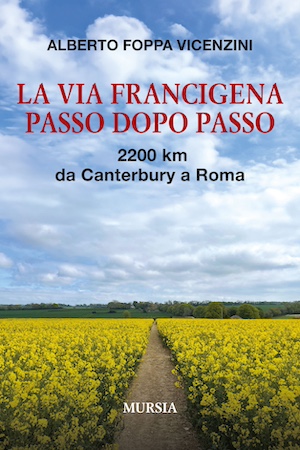
My book about the Via Francigena from Canterbury to Rome
In my book, I explain everything you need to know about packing your rucksack, how to organise it, and how to approach the journey in a practical and lightweight way. Using QR codes, you can access photos showing the details of the items and clothing used along the route.
Written in Italian, based on my personal journey.
Read the book